Source Halter Design Sleeveless Slip Dress for Daily, Party, and Summer events
Explore 30 listings for the Halter Design Sleeveless Slip Dress featuring Polyester and Cotton materials with Floral and Plant patterns. Buyers can compare OEM options, MOQs, and styles like Sexy, Loose, and Sweet for various occasions.
Key considerations
Products List


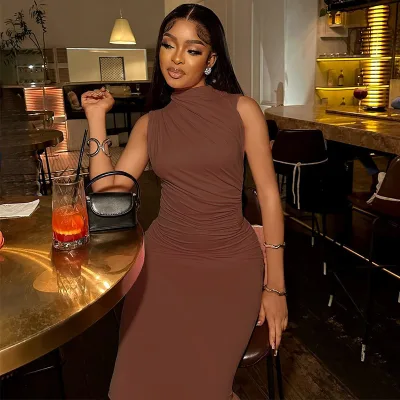
Soft Stretchy Printed Fabric Sleeveless Slip Dress Women‘S Slip Casual Dress
$5.00 - $5.20
MOQ: 100 Pieces


Comprehensive Sourcing Guide
Strategic Sourcing Guide for Halter Design Sleeveless Slip Dresses
The global market for women's apparel continues to evolve with a strong demand for versatile, stylish, and functional garments. Among these, the Halter Design Sleeveless Slip Dress has emerged as a staple for both casual daily wear and formal evening occasions. This guide provides a comprehensive, evidence-based framework for B2B buyers seeking to source this specific category. By analyzing the intersection of design attributes, material composition, and supply chain logistics, procurement professionals can make informed decisions that align with their brand requirements while mitigating common sourcing risks. The following sections detail the technical specifications, compliance considerations, cost structures, and quality assurance protocols essential for successful procurement.
Technical Specifications and Design Attributes
Understanding the precise technical specifications of a Halter Design Sleeveless Slip Dress is the first step in defining a successful product brief. The core design element, the halter neck, typically involves a strap that wraps around the back of the neck, leaving the shoulders and upper back exposed. This design is often paired with a sleeveless cut, which is explicitly observed in the current market data. The silhouette of these dresses varies significantly, ranging from short to long lengths, with medium-length options also being prevalent. Buyers must specify the desired length category—short, medium, or long—as this dictates the fabric consumption and the target demographic.
Material selection is equally critical. The supply data indicates a diverse range of fabrics, with polyester and cotton being the most commonly observed materials. Polyester is frequently chosen for its durability, resistance to wrinkling, and ability to hold vibrant colors, making it ideal for the "sexy" and "sweet" style variations noted in market listings. Conversely, cotton offers breathability and comfort, often preferred for the "loose" style variations intended for daily wear or warmer seasons. The pattern options are equally varied, including floral, plant motifs, multicolor designs, and other abstract patterns. Buyers should verify if the specific supplier can accommodate custom patterns or if they are limited to standard floral or plant-based prints.
The construction details also play a vital role in the final product's quality. Specifications such as the neckline style, often round neck in conjunction with the halter design, and waist design, which can be high-waisted, influence the fit and flattery of the garment. Closure types vary, with pull-on styles being common for slip dresses to ensure ease of wear. The skirt silhouette is another key differentiator; A-line cuts are frequently observed, providing a flattering fit that accommodates various body types. Additionally, the packaging standards vary from simple OPP bags to more complex shipping packages, which can impact the final cost and presentation of the goods.
Seasonal Relevance and Occasion Suitability
The versatility of the Halter Design Sleeveless Slip Dress is heavily influenced by seasonal trends and occasion requirements. Market observations indicate that these garments are available for a wide spectrum of seasons, including summer, spring/summer, autumn/winter, and spring & autumn. This broad seasonal availability suggests that the design can be adapted through fabric weight and layering strategies. For instance, lightweight polyester or cotton blends are ideal for summer and spring/summer occasions, offering breathability and a cool feel. In contrast, heavier fabric weights or layering with outerwear may be necessary for autumn/winter applications.
Occasion-wise, these dresses serve a dual purpose. They are marketed for daily wear, where comfort and a "loose" or "sweet" style are prioritized. Simultaneously, they are designed for party and formal events, where a "sexy" or more fitted silhouette is desired. The "party" occasion category often demands higher-quality finishes and more intricate detailing, such as specific floral or multicolor patterns that stand out in low-light environments. Buyers must align their sourcing strategy with the intended use case. If the target market is primarily for daily casual wear, the focus should be on durable, easy-care materials like cotton or high-quality polyester blends. For party wear, the emphasis should shift to fabrics with a better drape and a more luxurious finish, potentially requiring specific certifications for fire safety or fabric integrity depending on the region.
Cost Drivers and Minimum Order Quantity Analysis
The cost structure of sourcing halter design sleeveless slip dresses is influenced by several dynamic factors, including material costs, customization levels, and order volume. The observed market data reveals a significant variation in Minimum Order Quantity (MOQ) requirements, ranging from as low as 0 to as high as 10,000 units. This wide range indicates that the market accommodates both small-batch, agile suppliers and large-scale manufacturers. Buyers with lower volume needs may find suppliers with an MOQ of 500 or even lower, while those seeking bulk pricing for mass distribution might encounter MOQs of 10,000.
Material costs are a primary driver of the unit price. The price range observed in the market spans from $0.50 to $49.99 USD, reflecting the vast difference between basic polyester blends and premium cotton or custom-finished garments. The "customized" standard noted in the supply data suggests that bespoke designs, specific packaging, or unique fabric treatments will incur additional costs. Furthermore, the origin of the product, primarily China and Shanghai, influences logistics and labor costs. Buyers should be aware that while the base price may be competitive, the final landed cost will include shipping, which varies based on the packing method (e.g., OPP bag vs. sea/air express) and the destination.
The table below summarizes the key cost and volume variables observed in the current market landscape:
| Variable | Observed Range/Options | Impact on Sourcing Strategy |
|---|---|---|
| MOQ | 0 to 10,000 units | Lower MOQs allow for testing new designs but may have higher unit costs. Higher MOQs reduce unit cost but increase inventory risk. |
| Price Range | $0.50 - $49.99 USD | Price correlates with material quality (cotton vs. polyester), complexity of design (halter vs. simple), and finish quality. |
| Material | Polyester, Cotton | Polyester is generally lower cost and durable; Cotton is higher cost and offers better breathability. |
| Packing | OPP Bag, Package, Sea/Air Express | Custom packaging increases unit cost but enhances brand presentation. Standard packing is more cost-effective for bulk. |
| Origin | China, Shanghai | Proximity to major shipping hubs like Shanghai can reduce lead times and logistics complexity for international buyers. |
Compliance, Certification, and Standard Verification
In the B2B apparel sector, compliance and adherence to standards are non-negotiable, yet the supply data presents a mixed picture regarding formal certifications. The observed "prod_standard" entries include "customized" and specific dimensions like "30305" or "50*40 cm," which likely refer to packaging dimensions rather than international safety or quality certifications. This absence of explicit certification data (such as OEKO-TEX, GRS, or ISO 9001) in the provided facts necessitates a proactive verification approach by the buyer.
Buyers must explicitly request and verify compliance documentation from potential suppliers. Since the market data does not confirm the presence of specific safety or environmental certifications, relying on the supplier's word without third-party validation is risky. For garments intended for export to markets with strict regulations (e.g., the EU, USA, or Australia), buyers should require proof of compliance with local textile safety standards, including restrictions on azo dyes, formaldehyde, and heavy metals. The "customized" standard mentioned in the data implies that suppliers may be willing to meet specific buyer requirements, but this must be contractually binding.
Furthermore, the "OEM: Yes" attribute confirms that Original Equipment Manufacturing is available, meaning suppliers can produce goods under the buyer's brand. However, this also shifts the responsibility for ensuring that the manufacturing process adheres to the buyer's brand standards and any applicable legal requirements. Buyers should include clauses in their contracts that mandate adherence to specific international standards and allow for third-party inspection before shipment. The lack of standardized certification data in the initial product listings underscores the importance of due diligence in the supplier evaluation phase.
Supplier Evaluation and Production Capabilities
Evaluating suppliers for halter design sleeveless slip dresses requires a deep dive into their production capabilities, customization flexibility, and logistical reliability. The presence of "OEM: Yes" and "Customization: Available" in the data suggests that many suppliers are capable of adapting to specific buyer needs. However, the variation in product models (e.g., Slip Dress-006X, Clothing-016E, Strapless Dress-088X) indicates that suppliers may have diverse portfolios, and buyers must ensure the specific supplier has the expertise to produce the halter design specifically.
Key evaluation criteria should include the supplier's ability to handle the specific fabric types (polyester vs. cotton) and the complexity of the halter neckline construction. The "Sleeveless" and "Halter" attributes require precise pattern making and sewing skills to ensure the garment stays in place and provides the intended aesthetic. Buyers should request samples to verify the quality of the stitching, the durability of the halter strap, and the fit of the A-line or other silhouettes. Additionally, the "prod_packing" variations (OPP Bag vs. Sea/Air Express) indicate that suppliers have different packaging capabilities. Buyers should assess whether the supplier can meet their specific packaging requirements, especially if branding or protection during transit is a priority.
Logistical factors are also crucial. The "prod_origin" being listed as China and Shanghai suggests a concentration of manufacturing in this region. Buyers should verify the supplier's lead times and their ability to meet shipping deadlines, especially given the "by Sea, Air, or Express" options mentioned. The "MOQ" range of 500 to 10,000 units also serves as a filter; buyers must match their order volume with the supplier's capacity to avoid delays or quality compromises. A supplier with a high MOQ might offer better pricing but could be less flexible for small, agile orders.
Quality Control and Long-Term Procurement Strategy
Implementing a robust quality control (QC) strategy is essential for maintaining brand reputation and minimizing returns. Given the observed variations in material and style, a standardized QC protocol should be established. This protocol must cover fabric inspection for defects like pilling or color bleeding, particularly for the "Floral" and "Multicolor" patterns. The construction of the halter neck and the closure type (pull-on style) should be tested for durability and ease of use. For "Sweet" and "Sexy" styles, the fit and drape are critical, and measurements should be taken against the buyer's size chart to ensure consistency.
Long-term procurement considerations involve building a sustainable relationship with suppliers who can scale with the buyer's growth. The "customized" standard and "OEM" capabilities suggest that suppliers are open to long-term partnerships. However, buyers should diversify their supplier base to mitigate risks associated with supply chain disruptions. Relying on a single supplier for a high-volume order (e.g., 10,000 units) can be risky if that supplier faces production issues. Establishing relationships with multiple suppliers, each capable of handling different MOQs and product variations, can provide greater flexibility.
Furthermore, buyers should consider the environmental and social impact of their sourcing decisions. While the provided data does not explicitly mention sustainability certifications, the trend towards "cotton" and "customized" production may offer opportunities for more sustainable practices. Buyers can request information on the supplier's labor practices, waste management, and energy usage. By integrating these factors into the procurement strategy, buyers can future-proof their supply chain and align with the growing consumer demand for ethically produced apparel.
In conclusion, sourcing halter design sleeveless slip dresses requires a meticulous approach that balances design aesthetics, material quality, and logistical efficiency. By leveraging the observed market data and applying rigorous evaluation criteria, buyers can navigate the complexities of the global apparel market and secure high-quality products that meet their specific business needs. The key lies in clear communication, thorough verification of standards, and a strategic approach to supplier selection and quality control.
FAQs
Can I customize the Halter Design Sleeveless Slip Dress?
Yes, customization is available for this product category. Buyers can request specific patterns, materials, or packaging options like OPP bags, provided they meet the supplier's minimum order quantity requirements.
What materials are used for the Halter Design Sleeveless Slip Dress?
The dresses are primarily made from polyester or cotton. Polyester offers durability and vibrant color retention, while cotton provides breathability, with options available for both short and long styles.
Which MOQ levels are available for ordering these dresses?
Minimum order quantities range from 500 to 10,000 units depending on the supplier and customization level. Buyers should verify specific MOQs as some listings show requirements as low as 500 or as high as 10,000.
How is the Halter Design Sleeveless Slip Dress packaged?
Packaging options include simple OPP bags or more complex shipping packages. Some suppliers offer sea, air, or express shipping methods, which may influence the final presentation and cost of the goods.
What styles are available for the Halter Design Sleeveless Slip Dress?
Available styles include sexy, sweet, and loose fits. The designs often feature floral or plant patterns and come in various lengths such as short, medium, or long to suit different occasions.
Can I source these dresses from manufacturers in China?
Yes, the products originate from China, with specific mentions of Shanghai as a production hub. Buyers can find suppliers in this region offering OEM services and various shipping options.